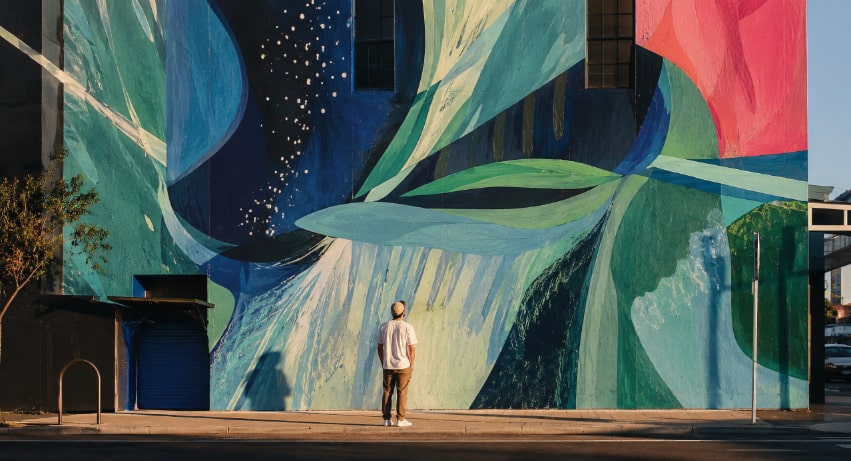
There is a particular kind of magic in public art. A mural that turns a blank gable wall into a landmark, a sculpture children cannot resist climbing, a light piece that only reveals itself after dark – these works belong to everyone who walks past them. Yet behind that easy, open feeling sits a surprising amount of quiet planning, negotiation and craft, and none of it happens by accident.
If you have ever wondered how to create public art projects of your own, the honest answer is that they ask for as much organisation as imagination. A finished piece has to survive weather, tight budgets, planning committees and the strong opinions of the people who live with it every day. It also has to earn attention in a world where free time is already shared between galleries, festivals and online entertainment platforms such as incaspin. The reassuring part is that the whole undertaking breaks down into clear, repeatable stages.
What Do We Mean by Public Art?
The phrase “general public art” covers far more than bronze statues in a town square. It stretches to anything created for, or placed within, a shared space – permanent or temporary, officially commissioned or grown from the grassroots. What ties these works together is access: you do not need a ticket, a dress code or any prior knowledge to encounter them, which is exactly what gives them their democratic charm.
Looking at a handful of public art examples makes that range much clearer. Each form suits a different setting, budget and level of ambition, so it pays to know your options before you fall in love with a single idea.
| Form | Typical example | Where you will find it |
|---|---|---|
| Mural | A community-painted wall celebrating local history | Housing estates, underpasses |
| Sculpture | A cast-bronze or welded-steel figure | Parks, plazas, roundabouts |
| Installation | A temporary light or sound piece | Festivals, waterfronts |
| Functional art | Artist-designed benches or bike racks | High streets, transport hubs |
Recognising these categories early helps you match your idea to the right site and audience long before a single sketch is put in front of a committee for approval.
Start With Place, People and Purpose
Strong projects rarely begin with the artwork itself. They begin with a place that needs something and a community willing to help shape it. Before you commit to a form or a material, spend real time listening to the people who will live alongside the finished piece, because their goodwill is worth more than any grant.
A few honest questions, asked early, will save you months of trouble later:
- Who uses this space now, and who feels shut out of it?
- What story, history or hope does the community want to see reflected back at them?
- How will the work behave in heavy rain, in crowds and after dark?
- Who will look after it in five or ten years’ time?
The best public art does not simply decorate a place – it explains that place back to the people who live there.
Answering these questions honestly keeps a project grounded and rooted in its neighbourhood. It also builds the local support that makes every later stage, from planning permission to fundraising, far smoother than it would otherwise be.
From Sketch to Structure: Planning the Build
Once the concept is agreed, a public art installation becomes a genuine construction project. Materials have to withstand the elements and everyday handling, fixings have to be safe under a climbing child or a strong gust, and the whole thing must meet the same standards as any other structure in a shared space. This is the point where romantic ideas meet engineering reality.
It helps to map the journey from first idea to unveiling as a sequence of phases, each with its own approvals, deliverables and costs.
| Phase | Main task | Typical output |
|---|---|---|
| Concept | Research and community consultation | An agreed brief |
| Design | Drawings, scale models, material tests | An approved maquette |
| Fabrication | Building the work off-site | Finished components |
| Installation | Siting, fixing and finishing on location | The unveiled piece |
Building a little slack into each phase is wise. Weather delays, material shortages and last-minute design tweaks are the norm rather than the exception, and a calm timeline absorbs them without drama.
Paying for It: Budgets, Grants and Partners
Ambition and funding rarely match on the first attempt. Most public works are paid for by stitching several sources together rather than waiting for one large cheque to arrive, so it is worth casting your net wide from the start.
The most common places to look for money include:
- Local authority culture and regeneration budgets
- National arts councils and heritage grants
- Corporate sponsorship and property-developer contributions
- Community crowdfunding and small local fundraising events
Whichever mix you settle on, keep the paperwork tidy from day one. Funders expect clear budgets, realistic timelines and evidence of community backing, and a well-kept record turns one successful grant into the track record that wins the next.
Caring for the Work Once It's Installed
The unveiling is a milestone, not the finish line. A public art installation lives outdoors, exposed to weather, wear and the occasional act of vandalism, so a maintenance plan should be agreed before the work goes up rather than scrambled together once problems appear.
A piece without a maintenance plan is not a gift to a community; it is a bill quietly waiting to arrive.
Set aside a modest annual budget for cleaning and repairs, agree in writing who holds responsibility, and keep the story of the work alive through signage, guided walks or school visits. Well-cared-for pieces mature into genuine landmarks, while neglected ones slowly slide into eyesores. Learning how to create public art projects, then, is less about a single flash of genius and more about patient, joined-up thinking – start with a place and its people, match the right form to the setting, plan the build like the construction job it is, fund it from several directions, and commit to its long-term care. Do that, and you will not merely add an object to a street; you will give a community something it can honestly call its own.